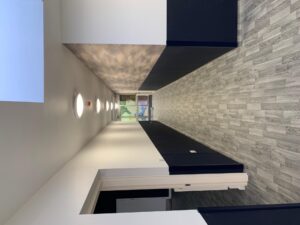
Commercial LED Lighting: Why It’s Become the Industry Standard
Fluorescent tubes, halogen lamps and high-intensity discharge lighting were once the standard choices for illuminating offices, factories, warehouses and other commercial buildings. They did the job, but often came with compromises in energy consumption, maintenance and performance.
Commercial LED lighting has transformed the way we light our buildings. Offering greater energy efficiency, longer operating life and impressive flexibility, LEDs have become the preferred choice for a wide range of commercial applications.
But what makes LED technology so different, and why should businesses consider making the switch?
What makes LED lighting different?
LED stands for light-emitting diode. Unlike traditional incandescent or halogen lamps, which produce light by heating a filament, LEDs use a semiconductor to convert electrical energy into light.
This process is considerably more energy-efficient, with less energy wasted as heat. LEDs also produce directional light, making it easier to aim illumination where it’s needed rather than relying on reflectors to control the output.
Early LED products were primarily used for indicator lights and specialist applications. However, advances in technology have transformed their capabilities, making them suitable for everything from subtle architectural lighting to powerful illumination in large industrial buildings.
Why switch to commercial LED lighting?
Energy savings might be the first benefit that comes to mind, but there’s much more to LED technology than lower electricity bills.
1. Greater energy efficiency and reduced running costs
Lighting can account for a significant proportion of a commercial building’s electricity consumption, particularly in premises operating for extended hours.
LED lighting typically uses considerably less electricity than older technologies to produce a comparable amount of light. According to the UK Government’s Energy Technology List, [https://etl.energysecurity.gov.uk/products/lighting] upgrading conventional lighting to LED technology can deliver cost savings of up to 80%. Actual savings will depend on the existing lighting system, operating hours and the specification of the replacement products. However, for businesses with large lighting installations, the potential savings can be substantial.
The benefits don’t stop at the light fittings themselves. Combining LEDs with smart lighting controls, occupancy sensors and daylight-responsive systems can reduce unnecessary energy consumption by ensuring lights operate only when needed and at the appropriate level.
2. Longer lifespan and less maintenance
Changing a light bulb might seem like a minor inconvenience, but what happens when that bulb is several metres above a warehouse floor or in a busy commercial building?
Access equipment, maintenance labour and disruption to normal operations can make lighting replacement a long process that is considerably more expensive than the cost of the lamp itself.
Quality LED luminaires can provide tens of thousands of hours of operation, significantly longer than many traditional lighting technologies. Rather than failing suddenly, LEDs generally experience a gradual reduction in light output over time.
For facilities managers and building owners, this means fewer replacements, reduced maintenance requirements and greater reliability throughout the lighting system’s working life.
3. Better lighting performance and quality
Good lighting does more than make a space visible. It can influence how comfortable, practical and welcoming an environment feels.
Modern LED technology offers considerable versatility in terms of light output, colour temperature, colour rendering and beam distribution. This allows lighting to be specified for the activities taking place, whether that’s detailed work in a production facility, computer-based tasks in an office or creating an inviting atmosphere in a retail environment.
With appropriate product selection and lighting design, LEDs can deliver consistent illumination, good colour representation and effective glare control.
4. Greater flexibility and control
In general, traditional lighting systems had limited flexibility. Lights were either on or off, with relatively little opportunity to adjust them to changing requirements.
In comparison, LED lighting can easily be changed for different circumstances. LED technology works particularly well with modern lighting control systems, allowing illumination to be dimmed, programmed and adapted according to the activity, external light sources or occupancy levels.
For example, a meeting room might require brighter lighting for presentations and softer illumination for informal discussions, while a warehouse could use occupancy sensors to reduce lighting levels in temporarily unused areas.
These capabilities provide greater control over both the lighting environment and energy consumption.
Where can commercial LED lighting be used?
One of the biggest advantages of LED technology is its versatility. From small architectural details to extensive lighting installations, there’s an LED solution for almost every commercial environment.
- Offices and workplaces: Recessed, suspended and surface-mounted LED fittings provide practical illumination for desks, meeting rooms and shared spaces, with controls to suit different working requirements.
- Schools and universities: LED lighting can accommodate the varied needs of classrooms, corridors, libraries, sports halls and other educational facilities.
- Retail and hospitality: Track lighting creates atmosphere and enhances the appearance of interior spaces. Accent lighting helps highlight products and architectural features.
- Factories and warehouses: High-output LED luminaires provide effective illumination across large areas, while their extended lifespan can help reduce maintenance in difficult-to-access locations.
- Healthcare facilities: Carefully specified lighting can meet the different requirements of consultation rooms, treatment areas, corridors and communal spaces.
- Exterior commercial spaces: Suitable LED fittings can illuminate building façades, entrances, pathways, car parks, landscaped areas and other outdoor environments.
The range of available products has expanded considerably over the years. Commercial LED lighting now includes recessed, suspended, track-mounted and linear lighting, as well as specialist exterior LED luminaires.
Of course, not every fitting is suitable for every environment. Factors such as required light levels, temperature, moisture, dust and exposure to the elements must all be considered when choosing the appropriate products.
What should you consider when making the switch to LED lighting?
For a commercial building, upgrading to LEDs isn’t always as straightforward as replacing an existing lamp with a commercial LED bulb.
Although direct replacements may be suitable in some circumstances, a complete lighting upgrade provides an opportunity to reconsider how a space is illuminated and whether the existing system still meets its requirements.
Before making the switch, there are several important questions to consider:
- Can existing fittings be upgraded? Refurbishing or re-engineering existing luminaires may offer a practical alternative to complete replacement, depending on their condition and suitability.
- What lighting performance is required? Appropriate illumination levels, colour quality, light distribution and glare control should be considered for each area.
- What are the long-term costs? Initial purchase price is only part of the picture. Energy consumption, maintenance requirements and expected operating life all influence the total cost of the lighting system.
- Would lighting controls be beneficial? Sensors, dimming and programmable systems can provide additional energy savings and greater flexibility to commercial LED lighting.
- Are standard products suitable? Architectural features, unusual spaces or specific performance requirements may call for a bespoke lighting solution.
Planning these elements together helps ensure the finished lighting installation delivers the right balance of efficiency, performance, aesthetics and value.
Finding the right commercial LED lighting solution
Choosing LED technology is only the starting point. Getting the best results depends on selecting the right products and designing a lighting system around the needs of the building and its occupants.
As an experienced commercial LED lighting company, ALD Lighting Solutions works with architects, consultants, contractors and facilities managers to develop practical lighting solutions for commercial projects across the UK.
Alongside a comprehensive range of standard lighting products, ALD specialises in bespoke product design and manufacture. As a specialist commercial LED manufacturer, we can develop and adapt LED luminaires to meet specific aesthetic, dimensional and performance requirements.
With such a wide range of LED lighting products and design possibilities available, the challenge is no longer whether LED technology can meet the demands of a commercial building, but which solution will deliver the best results. From straightforward upgrades to complex bespoke installations, careful product selection and lighting design can help make the most of everything modern LEDs have to offer.
Planning your next commercial lighting project?
Explore our commercial lighting services to find out how ALD can help you make the most of LED technology for your next project.